(Discover many other contents on: NOWO.ONE and NOWO Publishing)
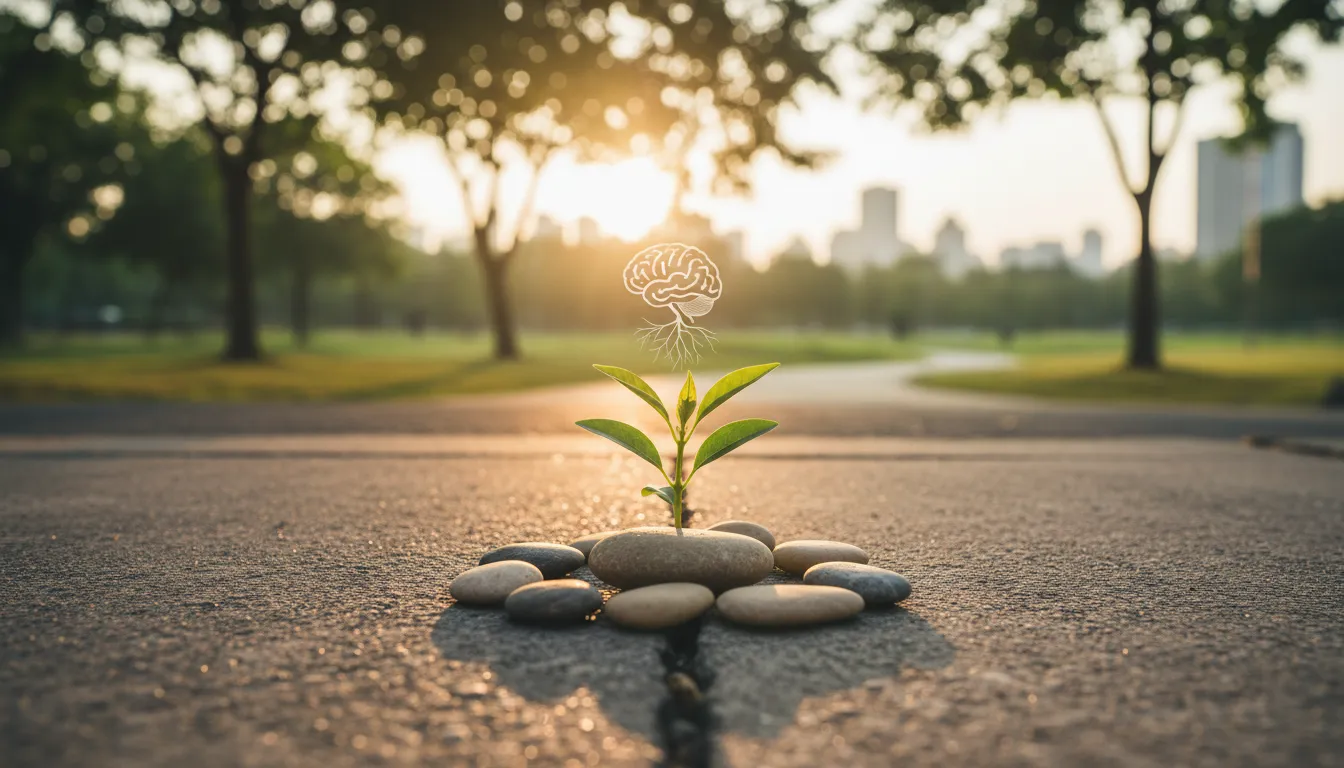
Personal growth rarely shows up as a dramatic “before and after.” It’s the quiet decision to learn one more thing, respond a little more calmly, or follow through when motivation dips. Personal growth is a continuous journey of self-improvement that involves the mind, emotions, and behavior. Through reading, reflection, and concrete action, a person can develop greater self-awareness, improve their habits, and achieve their goals. It is not about changing who you are, but about evolving by enhancing your strengths and working on your limitations. It is a journey that requires commitment, consistency, and openness to change.
Did You Know?
Small, repeatable behavior tweaks—like a 5-minute daily journal entry—often outperform “big reset” plans because they’re easier to sustain and compound over time.
Think of this as a practical frame you can run daily: read with intention (James Clear’s Atomic Habits or the Readwise app), reflect quickly (Day One or a Notes app prompt), then act in a measurable way (a single calendar block in Google Calendar). The goal is simple: build self-awareness, shape better habits, and keep real progress moving.
What Personal Growth Really Means
Personal growth is a continuous journey of self-improvement that involves the mind, emotions, and behavior. Through reading, reflection, and concrete action, a person can develop greater self-awareness, improve their habits, and achieve their goals. It is not about changing who you are, but about evolving by enhancing your strengths and working on your limitations. It is a journey that requires commitment, consistency, and openness to change.
For me, the biggest shift is dropping the idea that I’m a “broken project” that needs fixing. Growth isn’t self-rejection disguised as productivity. It’s a steady practice of noticing what’s true, keeping what works, and adjusting what doesn’t—without turning every flaw into a verdict on my worth.
It’s evolution, not a makeover
Personal growth means developing capacity over time—building on who you already are rather than trying to become a totally different person.
Not “fixing” yourself
Growth isn’t a repair project. It’s honest self-assessment without shame, paired with practical change where it matters.
Strengths + limitations, together
You amplify what works (your values, talents, habits) while addressing friction points (blind spots, triggers, unhelpful patterns).
Real-world benefits
Expect clearer decisions, more resilience under stress, healthier relationships, and greater follow-through on goals.
A mindset shift: curiosity and openness
Approach feedback, journaling, and learning like experiments—less judgment, more data.
Commitment + consistency beat intensity
Small, repeated actions—reading a few pages, reflecting for 5 minutes, doing one next step—compound over weeks.
To keep it grounded, I like using tools that turn “self-improvement” into observable behavior: Notion for a simple weekly review, Day One for journaling patterns, and Headspace for practicing emotional regulation when my mind runs hot. When I need momentum, I set one clear outcome in Todoist and attach the smallest next action.
The goal isn’t perfection; it’s clarity and resilience—showing up with more honesty, responding instead of reacting, and building relationships that feel safer because I communicate better and follow through.
The Three Pillars: Mind, Emotions, Behavior
Personal growth stays “continuous” when I treat it like a three-legged stool: Mind, Emotions, and Behavior. If one leg weakens, the whole thing wobbles. When all three strengthen together, I feel calmer, make better decisions, and follow through more often.
Mind: knowledge, beliefs, and cognitive habits
My Mind pillar is how I think and learn: what I pay attention to, what I believe is possible, and the mental loops I rehearse. I upgrade it by choosing better inputs (a Kindle book instead of doomscrolling), capturing ideas in Notion, and revisiting them until they become usable knowledge.
I also watch for “belief bottlenecks.” If I believe “I’m not consistent,” my brain will hunt for proof. When I switch to “I’m practicing consistency,” my brain starts looking for the next rep. Tools like Readwise can help me resurface highlights so my beliefs are shaped by evidence I collect, not just moods I feel.
Emotions: intelligence, regulation, and self-compassion
Emotions are not the enemy of growth; they’re the dashboard. Emotional intelligence for me means naming what I feel (“anxious,” not “bad”), recognizing the need underneath it (safety, competence, connection), and choosing a response that doesn’t sabotage tomorrow.
Regulation can be simple: a 60-second box-breathing timer, a short walk, or a quick body scan in Headspace. The big lever is self-compassion: I recover faster when I talk to myself like a supportive coach instead of a prosecutor. That’s what keeps setbacks from becoming spirals.
Balance Check: Mind × Emotions × Behavior
When I feel stuck, I scan these three pillars. Growth happens fastest when my thinking is clear, my feelings are regulated, and my routines match my intentions.
- ✓ Mind: upgrade inputs (books, courses), challenge beliefs, and practice better thinking loops
- ✓ Emotions: name the feeling, soothe the body, and respond with self-compassion
- ✓ Behavior: choose the next tiny action, design the environment, and track it for 7 days
Behavior: actions, routines, and daily habits
Behavior is where growth becomes visible. I make it concrete with tiny actions and clear triggers: “After I make coffee, I write 5 sentences,” tracked in Todoist or Streaks. If it’s not scheduled, it’s usually a wish.
The pillars reinforce each other. Example: I learn about strength training (Mind), feel intimidated but kind to myself (Emotions), then do a 10-minute beginner workout on Nike Training Club (Behavior). That action creates proof, which upgrades my beliefs, which makes the next rep easier.
Quick checks to stay balanced
Mind check: What’s one belief driving my choices today, and is it true?
Emotion check: What am I feeling right now, and what would soothe me without avoidance?
Behavior check: What is the next 5-minute action that matches the person I’m becoming?
Reading, Reflection, and Concrete Action Framework
If personal growth is continuous, I need a system that keeps me moving without relying on motivation. My most reliable loop is learn → reflect → act: I feed my mind with the right inputs, I digest them through reflection, and then I convert the best insight into one small experiment I can actually complete.
Reading: curate sources and read with intent
I don’t try to read everything. I curate a “small menu” so my attention isn’t constantly scattered: one deep book, one high-signal newsletter, and one story-driven source (memoir or podcast) to balance theory with lived experience.
For capture, I use Readwise Reader (or Pocket) to save articles and Kindle highlights, then export what matters into Notion or Obsidian. The key is reading with a question, not just consumption. Before I start a session, I write 1–2 questions like: “What skill would make my next month easier?” or “What belief is quietly limiting me?”
Reflection: turn information into self-knowledge
Reflection is where the real growth happens, because it forces me to relate the idea to my life. I journal in Day One when I want a simple, consistent habit, or Apple Notes when I want zero friction.
Prompts that reliably create clarity for me:
“What did I avoid this week, and what did it cost me?”
“When did I feel most like myself?”
“What pattern keeps repeating, and what’s the smallest interruption I can try?”
“What would I do if I trusted myself 10% more?”
I also schedule a weekly review (20–30 minutes) on my calendar: scan my week, list wins/drains, and pick one theme for next week. If I’m mentally noisy, I add 5 minutes of mindfulness using Headspace or Insight Timer—just enough to notice what I’m feeling instead of negotiating with it all day.
Weekly Learn → Reflect → Act Workflow
Curate a tiny reading queue
Pick 1 book (deep), 1 newsletter (current), and 1 narrative source (memoir/podcast). Save them to Readwise Reader or Pocket; keep the queue under 10 items.
Read with intent (questions first)
Before each session, write 1–2 questions you want answered. Highlight only what supports those questions; capture highlights to Notion or Obsidian.
Translate highlights into prompts
After reading, convert 3 highlights into journaling prompts ("How does this show up in my life?"). Answer them in Day One or Apple Notes in 5–10 minutes.
Run a weekly review
Once a week, review notes and calendar: wins, drains, lessons, and priorities. Use a simple template in Notion; choose one theme to focus on next week.
Choose one SMART micro-action
Turn the best insight into a micro-action: Specific, Measurable, Achievable, Relevant, Time-bound (e.g., "10-min walk after lunch Tue/Thu").
Design a 7-day experiment
Treat change like testing: define a trigger, action, and score. Track in Streaks or Todoist; adjust at week’s end based on results.
Concrete action: SMART micro-actions, experiments, and momentum
I keep actions embarrassingly small on purpose. A SMART micro-action is something I can do even on a chaotic day, and a 7-day experiment keeps me curious instead of judgmental.
My sample weekly allocation is simple: 3–4 short reading sessions (15–25 minutes), 3 micro-journals (5–10 minutes), one weekly review (20–30 minutes), and one experiment tracked daily (under 2 minutes). Momentum comes from small wins, habit stacking (attach the action to something I already do, like coffee or brushing teeth), and accountability—one friend check-in, a Focusmate session, or a recurring reminder in Todoist that asks, “Did you run the experiment today?”
Habits, Goals, and Measuring Progress
If personal growth is a continuous journey, my job is to build a system that keeps moving even when motivation dips. I start with keystone habits—small behaviors that cascade into better choices across my day. A consistent bedtime tends to improve focus, mood, and workout follow-through. A 10-minute “daily plan” can prevent reactive scrolling and make my priorities feel real.
Keystone habits work best when they’re embarrassingly doable. I pick one I can complete on my worst day (two minutes of journaling, one push-up, opening my language app). Then I scale only after it’s stable. I’m not proving willpower; I’m designing a default.
Pick 1 Keystone Habit
Choose one behavior that spills into everything else (sleep schedule, daily walk, or 10-minute planning). Make it small enough to do on your worst day.
Tie It to a Value + Pillar
Write the ‘why’ in one sentence and label it to a pillar (mindset, skills, relationships/health). If it doesn’t match a value, it won’t stick.
Set a 12-Week Target
Define an outcome plus a process goal: e.g., “Write 12 posts” + “30 minutes writing, 4x/week.” Keep only 1–2 active goals.
Track One Metric + One Marker
Use a simple number (sessions/week, pages, minutes) plus a qualitative note (energy, confidence, focus) to capture real progress.
Review Weekly, Iterate Quarterly
Do a 10-minute weekly check-in, then a quarterly reset: keep what works, adjust what doesn’t, and raise the bar only when consistency is stable.
What I measure (without turning life into a spreadsheet)
I use one simple metric and one qualitative marker. Metric examples: “deep-work minutes,” “workouts completed,” “pages read,” or “days I meditated.” Qualitative markers: energy (1–5), anxiety level, confidence before a hard task, or how quickly I recover after a setback.
For tracking, I pick the lightest tool that I’ll actually use. Apple Health or Google Fit handle steps and sleep basics. Strava is great when I want the social nudge for runs. Notion works for a weekly dashboard; Todoist is better when I need frictionless checklists. If I’m rebuilding consistency, a paper Habit Tracker or a simple bullet journal often beats another app.
When I iterate: feedback loops and quarterly reviews
I do a weekly 10-minute review: What did I do? What made it easier? What broke? Then I adjust the environment (move the charger, prep the gym bag, block distractions with Freedom) before I “try harder.” Every quarter, I run a reset: stop one habit that’s no longer serving me, double down on the one with the biggest spillover, and set the next 12-week target that fits my values and pillars.
Overcoming Resistance and Building Consistency
My most common obstacles are predictable: time disappears, motivation fades, perfectionism raises the bar, and fear of failure whispers, “Don’t start unless you can finish flawlessly.” When I treat those as design problems—not personality flaws—I get traction again.
For time, I stop negotiating with my calendar and start protecting a “minimum viable habit.” Three minutes counts. One page counts. Consistency is my real goal, not heroic effort. For motivation, I rely less on willpower and more on cues, friction, and rewards.
Two Ways I Build Consistency When Motivation Drops
Habit design (Atomic Habits-style)
Make the next action obvious, small, and tied to a cue so I don’t rely on motivation.
- • Implementation intention: “If it’s 7:00am and I’ve made coffee, then I journal for 3 minutes.”
- • Shrink the task: 1 push-up, 1 paragraph, 1 inbox reply—then stop or continue.
- • Shape the environment: keep running shoes by the door; block distractions with Freedom or Focus To-Do.
- • Track the chain with Streaks or Habitica to make progress visible.
Accountability that actually sticks
Use people and lightweight check-ins to create follow-through without shame.
- • Peer group: a weekly mastermind on Zoom or a Slack channel with one clear goal each week.
- • Coach/mentor: BetterUp or a local therapist/coach for structured reflection.
- • Commitment device: Beeminder to add stakes when I miss my target.
- • Micro-reviews: Sunday 10-minute check-in—what worked, what didn’t, what I’ll change.
When perfectionism hits, I use self-compassion as a tool: “I’m learning; messy reps are still reps.” I celebrate incremental wins (a checked box in Todoist, a streak in Streaks) because my brain repeats what gets rewarded.
After a setback, I don’t “start over.” I do a restart ritual: identify the smallest next step, remove one friction point, and schedule the next cue. Long-term view beats daily mood, and the journey continues even when I wobble.
Frequently Asked Questions
When I treat personal growth as a continuous journey, I stop hunting for a “final version” of myself and start building better patterns I can actually live with. These FAQs are the ones I come back to when I’m tempted to overcomplicate everything.
What is personal growth, and how is it different from self-help? ▼
How long does personal growth take, and how will I know I’m making progress? ▼
Where should I start if I feel overwhelmed by everything I could improve? ▼
How do I balance changing habits with staying true to who I am? ▼
What are practical daily habits that support continuous growth? ▼
How do I measure growth when it feels internal or subjective? ▼
How do I stay consistent when motivation fades? ▼
Can personal growth be harmful or misdirected? ▼
What resources (books, tools, journals) are most helpful to begin? ▼
If I want one simple anchor: I choose one behavior, one tool (Todoist or Notion), and one reflection habit (Day One). That’s enough structure to keep growth continuous without turning my life into a never-ending project.
Conclusion
Personal growth is a continuous journey of self-improvement that involves the mind, emotions, and behavior. Through reading, reflection, and concrete action, a person can develop greater self-awareness, improve their habits, and achieve their goals. It is not about changing who you are, but about evolving by enhancing your strengths and working on your limitations. It is a journey that requires commitment, consistency, and openness to change.
🎯 Key takeaways
- → Personal growth blends mind, emotions, and behavior—use reading, reflection, and concrete action to build self-awareness, habits, and results.
- → Choose one micro-action today (e.g., 10-minute walk or one page of journaling), track one metric daily in Notion or Apple Health, and keep it frictionless.
- → Schedule a weekly review in Google Calendar, recap wins and lessons in Day One, and stay consistent—gradual progress rewards commitment and openness to change.
My next step is simple: I’ll pick one micro-action, track one metric, and protect a weekly review. If I miss a day, I’ll restart the next one—no drama, just data. Small, repeated choices are how I earn real change.
TL;DR: Personal growth is a gradual evolution—not a makeover or repair job—built by enhancing strengths, addressing limitations, and practicing curiosity and self-compassion rather than shame. Small, repeatable actions like brief reading, five‑minute journaling, and one measurable next step compound over time and, with simple tools, turn intention into observable habits and real-world benefits.
Comments
Post a Comment