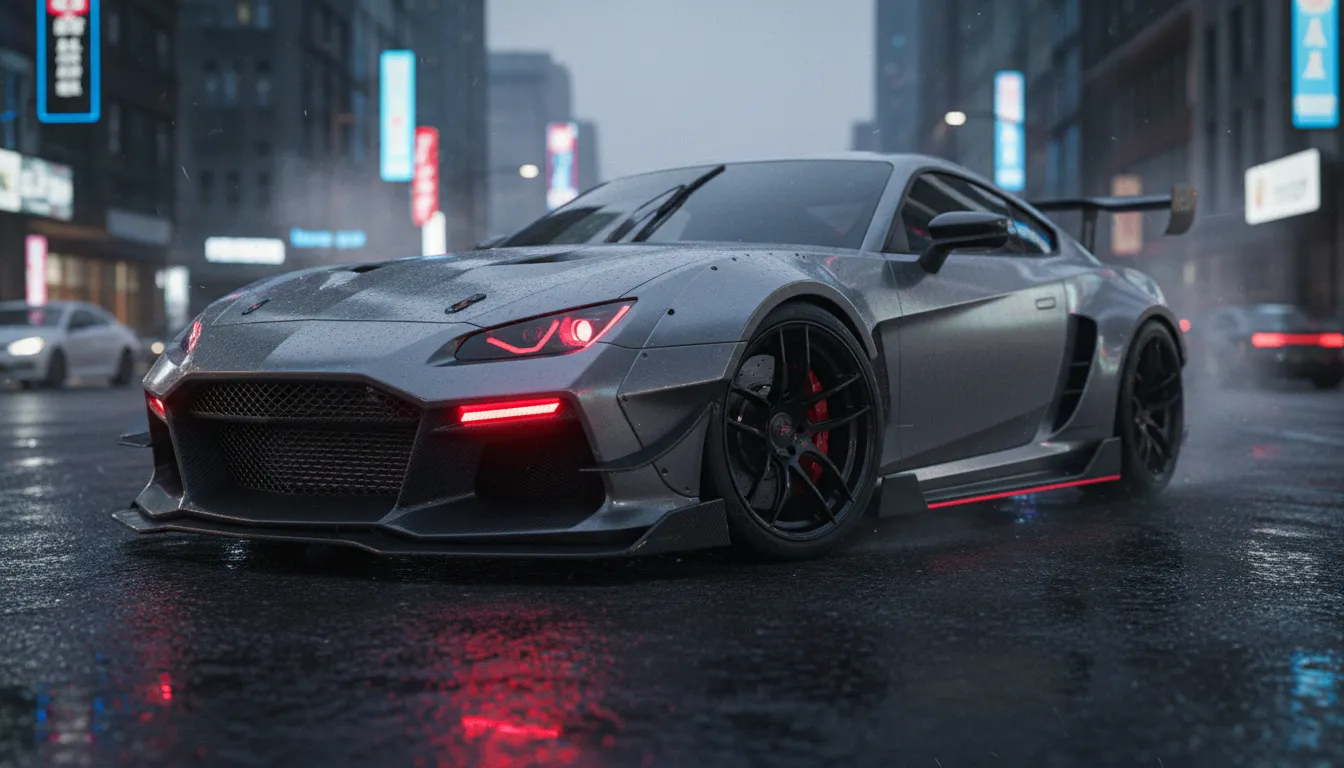
Give your car a more aggressive and dynamic look with a selection of exterior accessories designed to enhance its sporty style. Aerodynamic spoilers, side skirts, rear diffusers, bold front grilles, and carbon-look mirror covers: every detail is crafted to elevate aesthetics and express personality. Made from durable, high-quality materials, these accessories not only improve the vehicle’s appearance but also contribute to better aerodynamic performance. Perfect for those who want to stand out on the road with style and sportiness.
Did You Know?
In March 2026 listings, aero add-ons are most concentrated around a few platforms—especially Tesla Model Y Juniper (2026+), Ford Mustang S650 (2024–2026), and Honda Civic (2023–2025)—and many brands describe drag/downforce benefits without publishing measured coefficients or % gains.
Source: Aftermarket product listings (March 2026)
You’ll learn how to choose parts that match your platform and goals, from ABS plastic lips to real dry molded carbon fiber wings. We’ll also cover fitment-first shopping for 2026 refreshes, what “OEM-style” really means across vendors like RPM Tesla, Tesery, and Liqui Vinyl, and how to balance street-ready style with airflow-friendly design.
Why aerodynamic exterior accessories matter
Give your car a more aggressive and dynamic look with a selection of exterior accessories designed to enhance its sporty style. Aerodynamic spoilers, side skirts, rear diffusers, bold front grilles, and carbon-look mirror covers: every detail is crafted to elevate aesthetics and express personality. Made from durable, high-quality materials, these accessories not only improve the vehicle’s appearance but also contribute to better aerodynamic performance. Perfect for those who want to stand out on the road with style and sportiness.
Aero parts work because airflow is physical: it speeds up, slows down, separates, and creates pressure changes over and under the body. When you add a Tesla Model Y Juniper roof spoiler from RPM Tesla (real dry molded carbon fiber) or a Sport Style ABS rear spoiler wing for Model Y (2020–2026) sold by Tesery/Teskay, you’re shaping the wake at the tail and helping keep the rear end planted at speed.
How each accessory changes airflow (and the vibe)
Spoilers manage the air leaving the roof or trunk, trimming rear lift and making the car feel calmer on fast highway sweepers. Side skirts act like fences, reducing the amount of high-energy air that spills under the chassis, which can make the stance look lower and more purposeful. Rear diffusers guide underbody air as it exits, helping the car transition from “floating” to “settled,” while also giving that track-inspired, “ready to pounce” rear view.
Grilles are the face: a bold front grille on something like a Ford Mustang S650 (think Liqui Vinyl EOS-series styling) telegraphs aggression and perceived speed even when parked. Functionally, grille design can trade drag for cooling airflow, which matters if you’re prioritizing temperature control over absolute efficiency.
Real-world payoff: stability and confidence
You won’t always get published wind-tunnel numbers from current listings, but the driving feel can still change: less lift at the rear, fewer “light” moments over crests, and steadier tracking in crosswinds. That translates into driver confidence—especially in cars that see frequent highway speeds.
Materials and build quality: where results are made
ABS plastic (common for budget spoilers and grilles) is cost-effective and easy to paint, but can warp or fit poorly if molding is sloppy. Polyurethane parts can take impacts and flex, which is ideal for front lips and skirts that live near curbs. Real dry molded carbon fiber—like the RPM Tesla 2026+ Model Y Juniper spoiler—cuts weight and holds shape, but only if the weave, resin content, and mounting points are executed cleanly.
- Look for crisp edges, consistent thickness, and hardware that doesn’t feel like an afterthought.
- Prioritize fitment and mounting design as much as the finish; bad alignment can create turbulence and noise.
Popular accessories, materials, and price comparison
The most convincing “aggressive + dynamic” look usually comes from a few parts working together: a rear spoiler (roof or trunk wing), side skirts, a rear diffuser, and tighter front-end details like grilles and mirror caps. In the 2026 aftermarket, the most active fitment coverage is centered on the Tesla Model Y Juniper (2026+ refreshed), Ford Mustang S650 (2024–2026), and the Honda Civic (2023–2025), with ABS plastic, polyurethane, and real dry molded carbon fiber leading the materials list.
Popular accessories that change the silhouette fast
Rear spoilers (roof spoilers and trunk wings) deliver the biggest “performance” cue per dollar because they sharpen the car’s profile from every angle. For the Model Y community in particular, you’ll see everything from subtle OEM-style lips to wide “performance style” pieces marketed for stability and high-speed confidence (often without published test numbers).
Side skirts visually lower the car and connect the front and rear aero elements. They’re also the first part to reveal whether your build is cohesive: a sharp, angular skirt pairs well with a finned diffuser; a rounded skirt looks better with a mild spoiler and smoother rear valance.
Rear diffusers are the “race car” tell, especially when they add vertical fins and a more aggressive center section. Even if the aero claims aren’t quantified in listings, the visual effect is immediate—just make sure the fins don’t look oversized compared to your wheel/tire setup.
Front grilles and grille accents are huge for attitude on cars like the Mustang S650, where the front face sets the whole vibe. Choose designs that keep openings functional; overly closed-off grilles can look clean but may interfere with airflow to coolers and ducts.
Carbon-look mirror covers are a small mod with outsized impact. They pull “sport” details up to eye level and can match a carbon spoiler or diffuser without committing to a full carbon exterior theme.
Materials in 2026: what you’re really paying for
ABS plastic is the value king for spoilers, mirror caps, and many diffuser/skirt kits. It’s light, common, and easy to paint, which is why you’ll find price leaders like the Tesery/Teskay Sport Style ABS rear spoiler wing for the Tesla Model Y (2020–2026) listed around $189 on sale. The tradeoff is that cheaper ABS parts can show wavy edges, thinner mounting points, or faster surface aging if the paint/prep isn’t great.
Polyurethane (PU) is the durability pick for low parts that get scraped—especially side skirts and front lips—because it flexes instead of cracking as easily. PU can cost more than basic ABS and may be heavier, but it’s often a smarter long-term buy if your driveway angle, winter debris, or city curbs are part of daily life.
Real dry molded carbon fiber is where prices jump because you’re buying appearance, lower weight, and the “real deal” weave. A current example is the RPM Tesla 2026+ Model Y Juniper Refreshed Performance Style Spoiler in real dry molded carbon fiber listed at about $835 (discounted). Carbon typically holds its shape well and looks premium unpainted, but it’s less forgiving to impacts than PU and demands careful installation to avoid stress cracks.
- Best “value aggression”: ABS spoiler + ABS/PU side skirts in a matched finish (gloss black or paint-match).
- Best “daily durability”: PU skirts (and lips) where scraping is likely, ABS elsewhere.
- Best “show + weight savings”: dry carbon spoiler and/or diffuser accents, then keep the rest simple so the carbon looks intentional.
Model-specific picks and fitment focus for 2026
For a more aggressive, dynamic look in 2026, the “hot” aftermarket aero catalog is concentrated around three platforms: Tesla Model Y Juniper (2026+ refreshed), Ford Mustang S650 (2024–2026), and Honda Civic (2023–2025). The catch is fitment language is often broad (and aero claims are rarely quantified), so your best upgrade is equal parts styling choice and verification discipline.
Tesla Model Y Juniper (2026+ refreshed): clean performance style, low-drama fitment
Juniper buyers are trending toward OEM+ “performance style” roof spoilers, extended side skirts, and rear diffusers that visually lower the car without looking like a bolt-on kit. Premium picks lean into real dry molded carbon fiber: the 2026+ Model Y Juniper Refreshed Performance Style Spoiler - Real Dry Molded Carbon Fiber from RPM Tesla is listed at about $835 (often shown discounted), aimed at lightweight, crisp weave aesthetics.
For a more budget-friendly cosmetic hit, ABS is still king: the Sport Style ABS Plastic Rear Spoiler Wing for Model Y 2020–2026 (seen via Teskay and Tesery) commonly lists around $189 on sale. ABS tends to be the “daily driver” choice; dry carbon is the “photos + weight-conscious” choice.
Fitment rule: don’t trust “2020–2026” blanket listings for Juniper unless the seller explicitly says “Juniper” or “2026+ refreshed” and shows matching hatch/camera details. If a vendor only provides a “SKU” and no OEM-style part number, screenshot the listing title and photos and request written confirmation for “2026 Model Y Juniper.”
Ford Mustang S650 (2024–2026): spoilers depend on trim and decklid patterns
S650 trends toward bolder rear profiles: taller pedestal-style wings, “GT Performance Package” look spoilers, and more angular rear diffusers. A common cosmetic/performance-style option is the 2024–2026 Ford Mustang S650 GT Performance Package Spoiler Matte Black from Liqui Vinyl (EOS series). Matte black works especially well on darker colors and hides road grime better than gloss.
Fitment rule: S650 aero listings often split by coupe vs convertible and may hinge on Performance Package decklid hole patterns. Before ordering, verify whether the spoiler is adhesive-mount, uses existing holes, or requires drilling—this is where “vendor compatibility” breaks down fast between brands.
Honda Civic (2023–2025): body style and exhaust cutouts decide everything
On the 11th-gen Civic, the aggressive look usually comes from front lips, side skirts, and rear diffuser finishes that sharpen the factory lines rather than reinvent them. ABS is popular for cost and replaceability, while polyurethane-style kits are chosen for flexibility and curb-scrape survival. Carbon fiber gets used as a highlight piece (spoiler or lip) rather than a full set for most builds.
Fitment rule: confirm Sedan vs Hatchback first, then check the diffuser’s exhaust cutout layout (single/dual/center). Also watch Type R/Si wording—those parts may not interchange cleanly with non-Type R bumpers.
When you see “part numbers,” treat them as three different things: OEM part numbers (rare in cosmetic aero), vendor SKUs (common), and platform tags (“S650,” “Juniper,” “11th gen”). The safest compatibility move is to cross-check the exact listing title, the platform keyword, and the photo match—then confirm returns/exchanges before you commit to painted or carbon pieces.
Installation, fitment and maintenance: practical tips
A more aggressive look lives or dies on fitment. A dry carbon spoiler like the RPM Tesla 2026+ Model Y Juniper Performance Style piece typically rewards careful prep, while budget ABS options (like the Tesery ABS rear spoiler) can look great but demand extra patience around alignment and paint.
DIY vs professional install (and what you’ll pay for)
DIY is realistic for tape-on spoilers and some side skirt kits if you’re comfortable measuring, cleaning, and committing to placement. Expect to buy consumables like 3M VHB tape, 3M Adhesion Promoter, painter’s tape, and a basic heat gun.
Professional installation is worth it for drilled mounts, multi-piece diffusers, or when you want paint that matches OEM orange peel and gloss. Typical shop quotes vary by area, but labor often lands in the “couple hundred dollars” range for simple add-ons and can climb quickly with paint, bumper removal, and test-fitting.
Fitment checklist (before you peel tape or mix paint)
- Measurements: confirm model/year/trim (Model Y Juniper 2026+, Mustang S650 2024–2026), mark a centerline, and compare curvature to the panel.
- Paint prep: wash, decontaminate (iron remover/clay), then wipe mounting areas with 70% IPA.
- Mounting: use quality tape (3M VHB 5952/4910). If drilling, deburr and protect bare metal; use rubber washers.
- Gap alignment: dry-fit, target consistent 1–2 mm gaps, and check symmetry from multiple angles.
Care by material (and the pitfalls to avoid)
ABS is paint-friendly, but poor primer/adhesion promoter is the fastest route to peeling and edge chips. PU (polyurethane) flexes better for daily driving; the mistake is cranking fasteners down until the part deforms and later sags.
Dry molded carbon fiber looks premium, but treat the clear coat like paint: gentle washes, UV protection (a ceramic coating helps), and no abrasive compounds. Whatever you choose, recheck hardware after the first week—most “mystery rattles” are simply settling tape or loosening fasteners.
Balancing aesthetics and aerodynamic performance
Aggressive visuals are easy to buy; measurable aero is harder. Most current listings for spoilers, side skirts, and diffusers (especially for the 2026 Tesla Model Y Juniper, Ford Mustang S650, and late-model Honda Civic) promise “stability” and “downforce,” but rarely publish drag/downforce numbers. Decide upfront whether you’re building for stance-and-style or for high-speed composure you can actually feel.
If the goal is primarily looks, prioritize a cohesive silhouette: match the “sharpness” of the front lip to the side skirt profile, then choose a rear diffuser that visually ties into your exhaust/valance area. A big wing with mild skirts often looks top-heavy; a subtle spoiler with chunky skirts can look under-finished. For Model Y Juniper examples, a dry carbon roof spoiler like the RPM Tesla 2026+ Juniper Performance Style Spoiler reads motorsport, while an ABS alternative like Tesery/Teskay’s Sport Style ABS rear spoiler keeps the vibe without the price spike.
Budgeting: where to splurge vs save
Splurge on fitment and mounting hardware—panel gaps and peeling tape kill the “OEM+ aggressive” illusion fast. Real dry molded carbon can be worth it for flagship pieces you stare at daily (a spoiler), while ABS plastic and polyurethane are smart for sacrificial parts like lips and skirt extensions that meet curbs and road debris.
Legal and safety reality checks
Keep the build street-friendly: don’t block the license plate, taillights, or reflectors, and avoid sharp edges or protrusions. Watch ride height and approach angles—an extreme front lip that scrapes on every driveway isn’t “track,” it’s downtime. When in doubt, check local vehicle equipment rules before drilling or deleting anything safety-related.
Frequently Asked Questions
Picking a spoiler, diffuser, or side skirt is part style, part practicality. These quick answers cover the safety, legality, materials, and whether “aero” parts actually do anything beyond looking aggressive.
FAQ: Spoilers, Diffusers, Materials, and Real-World Results
Are aftermarket spoilers and diffusers safe and legal? ▼
Which material is best: ABS, polyurethane, or real dry molded carbon fiber? ▼
Will exterior accessories actually improve handling or just look good? ▼
If you’re shopping now, fitment matters: current aftermarket focus is heavy on Tesla Model Y Juniper (2026+), Ford Mustang S650 (2024–2026), and Honda Civic (2023–2025). Match the part to your exact trim, and you’ll get the aggressive look without the headaches.
Conclusion
Give your car a more aggressive and dynamic look with a selection of exterior accessories designed to enhance its sporty style. Aerodynamic spoilers, side skirts, rear diffusers, bold front grilles, and carbon-look mirror covers: every detail is crafted to elevate aesthetics and express personality. Made from durable, high-quality materials, these accessories not only improve the vehicle’s appearance but also contribute to better aerodynamic performance. Perfect for those who want to stand out on the road with style and sportiness.
🎯 Key Takeaways
- → Prioritize fitment first (e.g., Tesla Model Y Juniper 2026+, Ford Mustang S650 2024–2026, Honda Civic 2023–2025), then choose the look: spoiler, side skirts, rear diffuser, grille, mirror covers.
- → Pick materials that match your goals: ABS for value, polyurethane for flexibility, and real dry molded carbon fiber for the lightest premium finish (e.g., RPM Tesla Juniper dry carbon spoiler).
- → Next steps: confirm paint/finish (matte black, carbon-look), plan install (3M tape vs hardware), and verify return policy since most listings claim aero benefits without published % gains.
If you want a quick win, start with a rear spoiler: options like RPM Tesla’s 2026+ Model Y Juniper dry molded carbon fiber spoiler or an ABS alternative from Tesery/Teskay change the stance fast. Then layer in side skirts and a diffuser, and get the alignment right so the “sporty” reads intentional, not tacked-on.
TL;DR: Upgrade your car's look and handling with exterior aero accessories—spoilers, side skirts, diffusers, grilles and carbon-look mirrors—available in materials from ABS to real dry-molded carbon to enhance style and influence airflow. The post explains how each part affects aerodynamics, highlights 2026 listing hotspots (Tesla Model Y Juniper, Ford Mustang S650, Honda Civic), compares vendors, and urges fitment-first shopping while noting many sellers claim drag/downforce benefits without publishing measured data.
Comments
Post a Comment