(Discover many other contents on: NOWO.ONE and NOWO Publishing)
Easter decor is my favorite shortcut to a brighter home: a few pastels, a touch of nature, and everything suddenly feels lighter—like spring officially moved in.
Did You Know?
Pastel Easter palettes feel especially “spring-like” because they mimic early-bloom florals (think tulips and hyacinths), which is why 2026 decor trends pair soft pinks, mint, and lavender with real flowers, linen, wicker, and ceramics for a lighter, happier look.
Source: Wurm – Easter Trends 2026 (wurm.com)
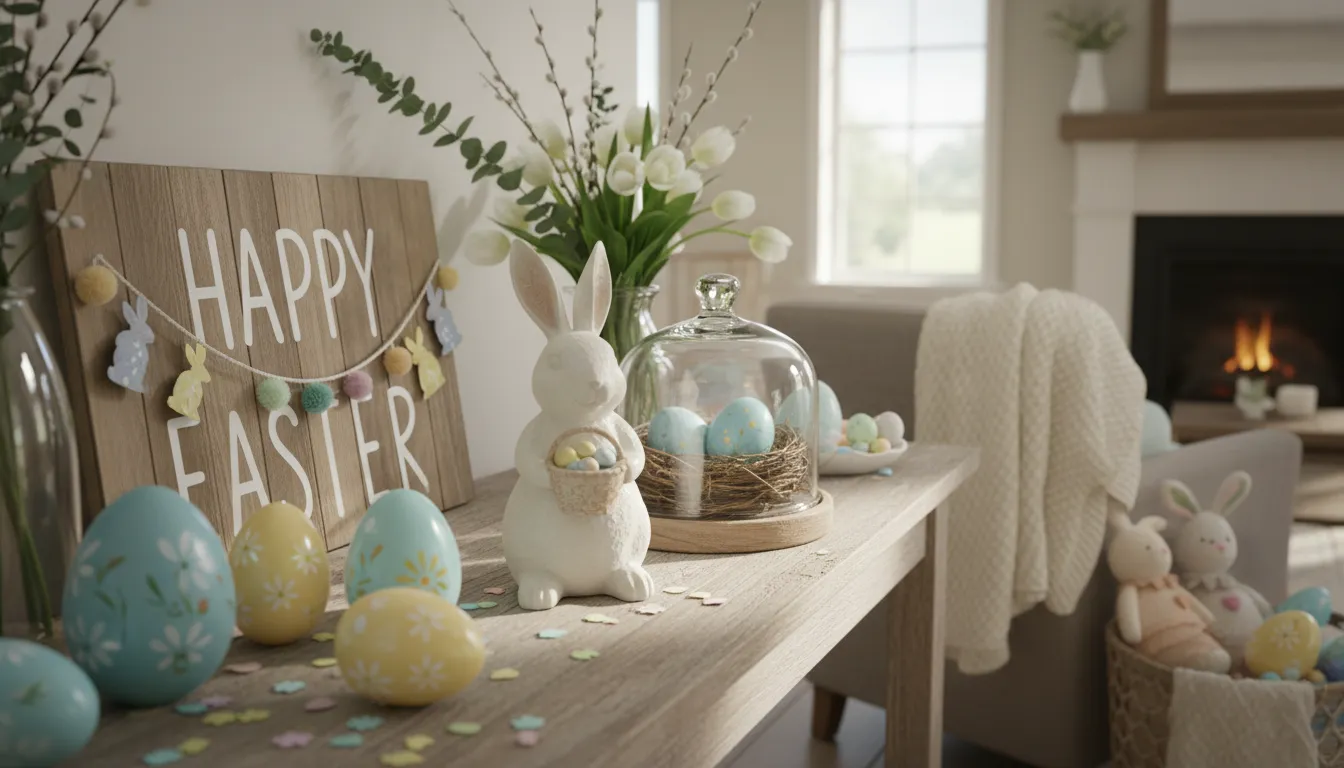
Easter home decorations bring a fresh, cheerful, and spring-like atmosphere. Pastel colors such as pink, yellow, and green dominate the decor, combined with natural elements like fresh flowers, woven branches, and wreaths. Decorated eggs, bunnies, and chicks are the main highlights, arranged on tables, shelves, and centerpieces. Scented candles and light fabrics, such as themed tablecloths and cushions, complete the setting, making it cozy and festive. Every detail reflects the renewal of spring and creates a warm and joyful atmosphere for the whole family.
I’ll share 2026 trends (think Wurm’s pastel-and-natural direction and McGee & Co–style chic), easy how-tos for mantels and tables, beginner-friendly DIYs, styling tricks, and sustainable shopping ideas using linen, ceramics, wicker, and real florals over synthetic shine.
2026 Easter Trends: Pastels, Natural Textures, and Sustainability
In 2026, Easter styling leans calm and considered: soft pastels on top of warm neutrals, grounded by natural textures, and finished with choices that feel reusable instead of disposable. I’m seeing the same direction across retailers and designers (including McGee & Co.) and wholesale trend roundups like Wurm: less shiny plastic, more ceramic, wood, linen, wicker, and real flowers.
Easter home decorations bring a fresh, cheerful, and spring-like atmosphere. Pastel colors such as pink, yellow, and green dominate the decor, combined with natural elements like fresh flowers, woven branches, and wreaths. Decorated eggs, bunnies, and chicks are the main highlights, arranged on tables, shelves, and centerpieces. Scented candles and light fabrics, such as themed tablecloths and cushions, complete the setting, making it cozy and festive. Every detail reflects the renewal of spring and creates a warm and joyful atmosphere for the whole family.
Why pastels keep winning (and how to make them look modern)
Pastels dominate because they photograph beautifully in daylight, read as “spring” instantly, and soften a room without repainting or swapping big furniture. The 2026 version is quieter—think blush pink, butter yellow, sage green, mint, and lavender—paired with warm white, oat, and natural wood so it feels elevated instead of candy-colored.
My go-to formula is a “two-pastel limit”: choose one hero pastel (sage or lavender is especially chic) and one supporting pastel (butter yellow works like sunshine), then keep everything else neutral. A white ceramic bunny, a simple speckled-egg garland, and pastel taper candles from H&M Home or Anthropologie are enough to signal the season without clutter.
Natural elements are the new “luxury”
Natural country charm is rising because it makes a space feel warm and authentic. Fresh tulips, ranunculus, and hyacinths do the heavy lifting, while pussy willow branches and eucalyptus add height and movement. Texture matters as much as color: a linen table runner, a wicker tray, a wood bead garland, and matte ceramic vases immediately shift the vibe toward spring.
For “modern farmhouse” rooms, I keep the base neutral (stoneware plates, glass cloches, raw wood boards) and add subtle spring cues—one small bunny figure, a bowl of painted eggs, and a low floral arrangement. If you like a little sparkle, choose one refined accent like micro-LED fairy lights tucked into a mantel garland rather than glitter on every surface.
Sustainability: the trend that makes everything else look better
The most “market-style” shift I’m noticing is buyers favoring fewer, better pieces: one good ceramic rabbit (try Target Hearth & Hand with Magnolia, Crate & Barrel, or thrifted vintage), a linen runner you’ll use year-round, and flowers you compost when you’re done. When I’m choosing between two similar items, I pick the one that’s refillable (like a candle in a ceramic vessel), repairable, or easy to store flat for next year.
Palette preference: modern pastels (mint/lavender/sage) paired with warm neutrals over saturated brights
Material adoption: linen, wood, wicker/rattan, and matte ceramics replacing glossy plastics on mantels and tables
Trend growth: “natural country charm” and “modern farmhouse neutrals” rising because they’re reusable beyond Easter
Designing Eye-Catching Centerpieces and Mantels
My favorite Easter decorating “shortcut” is layering: a grounded base of greenery, a clear floral focal point, then a few playful accents (eggs, bunnies, chicks). It fits the 2026 vibe perfectly—soft pastels (mint, blush, lavender) paired with natural materials like ceramics, wicker, wood, and real flowers for a light, authentic look.
The Layering Formula That Never Looks Fussy
Start wide and low so everything feels intentional. I lay down seeded eucalyptus or Italian ruscus first, then tuck in tulips, ranunculus, hyacinths, or sweet peas as the “star.” Last, I repeat small accents in 2–3 spots for rhythm—speckled eggs, a stoneware bunny, or tiny chick figures—leaving negative space so it doesn’t turn into clutter.
Container Choices (and the Real Tradeoffs)
Ceramics: A matte stoneware compote (like a McGee & Co.–style pedestal) makes pastels look expensive. Downside: heavy, and narrow openings can be tricky without floral foam or a pin frog.
Wicker baskets: Instant country charm and very 2026. Downside: line it with a glass jar or watertight insert so stems don’t leak and stain.
Vintage trays: My go-to for coffee tables and mantels—brass or silverplate corrals small pieces. Downside: trays show wax drips and water rings, so I add felt pads and a small catch dish.
Three Quick Builds: Dining Table, Coffee Table, Mantel
Dining table: Keep height low so guests can see each other—greenery runner, clustered tulips and ranunculus, then three speckled eggs spaced down the line. I swap in linen napkins (H&M Home) in mint or blush to echo the palette.
Coffee table: Use a tray with a bud vase trio (odd numbers read styled), a single Nest Bamboo candle, and one bunny figure. Add one small bowl for chocolate eggs so it feels lived-in, not precious.
Mantel: Anchor with a garland of ruscus, then stagger bud vases left-to-right for movement. Twist in warm-white microLED “fairy lights” (Battery Operated Micro LED String Lights), and place 3–5 crystal accents near the ends so they catch evening light without stealing the show.
Easy DIY Easter Projects for a Cheerful Home
For 2026’s soft pastel look (mint, lavender, blush, buttery yellow) paired with natural textures, I stick to three fast DIYs: elevated eggs, a branchy wreath, and tiny bunny/chick accents. They’re simple enough for a weeknight, but they still read “intentional” on a mantel or tablescape.
Simple decorated eggs: natural dye, pastel paint, and decoupage
Natural dyeing makes gentle, modern color without the neon. Use white vinegar to help set the dye, and dry eggs on a wire cooling rack so they don’t pool. Once dry, buff lightly with a dab of olive oil for a subtle sheen (especially pretty on cabbage-blue and beet-pink).
For painted eggs, I like Apple Barrel Acrylic Paint in “Pastel Lilac” and “Ballet Pink.” Finish with Aleene’s Original Tacky Glue for tiny ribbon bows, or a whisper of Rub ’n Buff in “Silver Leaf” for modern sparkle without going full glitter.
Wreaths and woven-branch crafts
Build a wreath on a 12-inch grapevine base from Michaels, then tuck in flexible willow stems (floral wire helps). Add a linen bow (wired ribbon) and a few faux tulips from Afloral, or keep it country-chic with dried bunny tails and eucalyptus. For a woven-branch tray, coil thin branches into a shallow spiral and secure the underside with hot glue from a Surebonder mini glue gun.
Quick bunny and chick accents (felt, clay, recycled)
Cut bunnies from stiff felt (Benzie Design) and stitch with embroidery floss; they’re perfect as napkin rings. For chicks, shape Sculpey Air-Dry Clay into egg-sized forms, press in peppercorn “eyes,” and paint once dry. Recycle cardboard egg cartons into a garland—snip cups into flower shapes, paint pastel, and string with jute twine.
Kid-friendly projects and safety tips
Use blunt-tip scissors and a Cricut EasyPress Mini (instead of an iron) for supervised felt details.
Skip real candles on kid-height surfaces; choose battery micro-LED fairy lights (e.g., Twinkle Star) inside a glass hurricane.
For natural dyes, keep pots adult-only, and set up a washable “dye station” with a silicone baking mat and nitrile gloves.
Sustainable Shopping, Materials, and Budgeting for Easter Decor
My quickest way to get that airy 2026 pastel look (pink, mint, lavender, soft blue) without the plastic-y shine is to start with materials that already feel “real” in daylight: ceramic, wood, linen, wicker, and fresh flowers. These textures read elevated even when the colors are playful, and they photograph beautifully against white walls and natural wood.
Choose materials that age well (and store well)
I prioritize ceramic rabbits, stoneware egg dishes, and a single vase that can live on a shelf year-round. For wood accents, I look for FSC-certified wooden eggs or a small carved bunny; they take paint and wax well if I ever want to refresh the finish. Linen is my favorite “instant upgrade”—a flax linen runner or napkins in a barely-there blush makes everything look intentional.
When I’m tempted by cheap plastic garlands, I swap to compostable or reusable options: real tulips, ranunculus, or potted muscari (grape hyacinth) on the table; paper honeycomb eggs; or a simple vine of fresh greenery. If I do buy lights, I pick microLED wire lights (copper or silver) that can be reused for birthdays and winter too.
Cost vs. longevity: invest in the base, “rent” the bloom
My rule is to invest in the pieces that touch your hands and anchor the scene: a ceramic bunny, a wooden ornament set, a linen runner, a wicker basket. Then I “rent” the seasonal moment with flowers—because fresh stems are meant to be temporary and joyful.
Budget breakdown: high-end pastel, smart swaps
If I’m aiming for an expensive-looking setup on a modest budget, I split it like this: 60–70% on reusable “base” pieces (runner, vase, one ceramic figure), 20–30% on flowers/greens, and 10% on small accents (paper eggs, ribbon, candles). A matte taper candle in butter yellow or blush instantly softens a tablescape more than a pile of novelty trinkets.
Where I shop (and what I hunt for)
Thrift and vintage: Goodwill, Salvation Army, local antique malls—stoneware, baskets, glass bud vases.
Artisan: Etsy makers for hand-painted wooden eggs and linen napkins; local pottery studios for one heirloom bunny.
Sustainable brands: Coyuchi (linen), West Elm (often FSC options), and Terrain for spring florals.
Seasonal markets: farmers’ markets and pop-up spring fairs for locally grown tulips and potted bulbs.
Styling Tips Room-by-Room: Fabrics, Scents, and Finishing Touches
I keep 2026 Easter decorating feeling fresh by layering soft pastels (mint, blush, lavender) over natural, sustainable textures—linen, ceramic, wicker, and real flowers. The goal is “spring joy,” not a plastic overload.
Dining room: tablecloths, pastel tableware, centerpiece placement
Start with a linen tablecloth (ivory reads modern farmhouse; mint reads playful) and add a gingham runner for gentle theme without shouting. For tableware, I like mixing Anthropologie “Bunny” plates with simple IKEA DINERA pastel bowls so the look stays elevated.
Keep your centerpiece low: a tulip-and-ranunculus arrangement in a white ceramic vase looks crisp and won’t block conversation. Finish with rattan napkin rings, speckled egg place cards, and clear glass coupes that catch candlelight.
Living room: cushions, throws, mantel styling, shelf vignettes
Swap in H&M Home linen cushion covers in lavender or mist and drape a lightweight Brooklinen throw for instant seasonal softness. On the mantel, a three-piece setup looks intentional: candlesticks, a ceramic bunny, and a couple of bud vases with single stems.
For shelves, I stick to a “rule of three” vignette—stacked books, a moss bowl, and a framed spring print—so it feels curated, not cluttered.
Entryway and kids’ spaces: playful accents, wreaths, storage-friendly decor
In the entry, a grapevine wreath with a pastel ribbon sets the tone fast; add a small tray for keys with a few mini faux eggs. In kids’ areas, felt garlands and lidded baskets corral egg-hunt gear, then tuck away easily in a clear bin labeled “Easter.”
Scent and texture: candles, fresh florals, and cozy linen
Scent is the invisible finishing touch: I’ll light Diptyque “Baies” in the living room and use Yankee Candle “Clean Cotton” near the entry for that airy, just-cleaned vibe. Fresh hyacinth, tulips, and a few eucalyptus stems make the whole house feel like spring—especially when paired with nubby linen cushions and glossy ceramics.
Frequently Asked Questions
When I want “fresh pastel spring joy” without the sugary look, I keep the palette edited and let natural texture do the heavy lifting. 2026 trends lean into soft pastels paired with ceramics, wood, linen, wicker, and real flowers—less shine, more authenticity.
FAQ: Pastel Easter decor, flowers, sustainability, storage, and kid-safe ideas
What pastel color combinations look elegant for Easter? ▼
How do I keep fresh spring flowers looking their best? ▼
Which sustainable materials should I prioritize when shopping for decor? ▼
How should I store delicate Easter decorations after the season? ▼
What are quick, kid-safe decoration ideas for toddlers? ▼
Conclusion
Easter home decorations bring a fresh, cheerful, and spring-like atmosphere. Pastel colors such as pink, yellow, and green dominate the decor, combined with natural elements like fresh flowers, woven branches, and wreaths. Decorated eggs, bunnies, and chicks are the main highlights, arranged on tables, shelves, and centerpieces. Scented candles and light fabrics, such as themed tablecloths and cushions, complete the setting, making it cozy and festive. Every detail reflects the renewal of spring and creates a warm and joyful atmosphere for the whole family.
🎯 Key takeaways
- → Keep it light: build around a soft pastel palette (pink, mint, lavender, or buttery yellow) balanced with white or warm neutrals.
- → Add nature + texture: fresh tulips, woven wicker, linen runners, and ceramic or wooden accents create the 2026 sustainable look.
- → Finish with small, cozy details: painted eggs, bunny figures, microLED twinkle lights, and scented candles—then plan one focal centerpiece.
My next steps are simple: choose one palette (mint + cream is my go-to), sketch a centerpiece using a ceramic vase, tulips, and a linen runner, then swap in sustainable touches like wicker trays, wooden eggs, and reusable McGee & Co–style stoneware instead of plastic shine. If I add one string of microLED lights on the mantel, the whole room feels finished.
TL;DR: Easter decor is an easy way to brighten your home, and 2026 trends favor soft pastels (blush, mint, lavender, butter yellow) paired with warm neutrals, natural textures, and sustainable materials like linen, ceramics, wicker, and real flowers. Keep styling simple and modern by using a “two-pastel limit” (one hero, one supporting shade), grounding pieces with wood and neutrals, and choosing reusable, non-plastic items for an elevated, springlike look.
Comments
Post a Comment