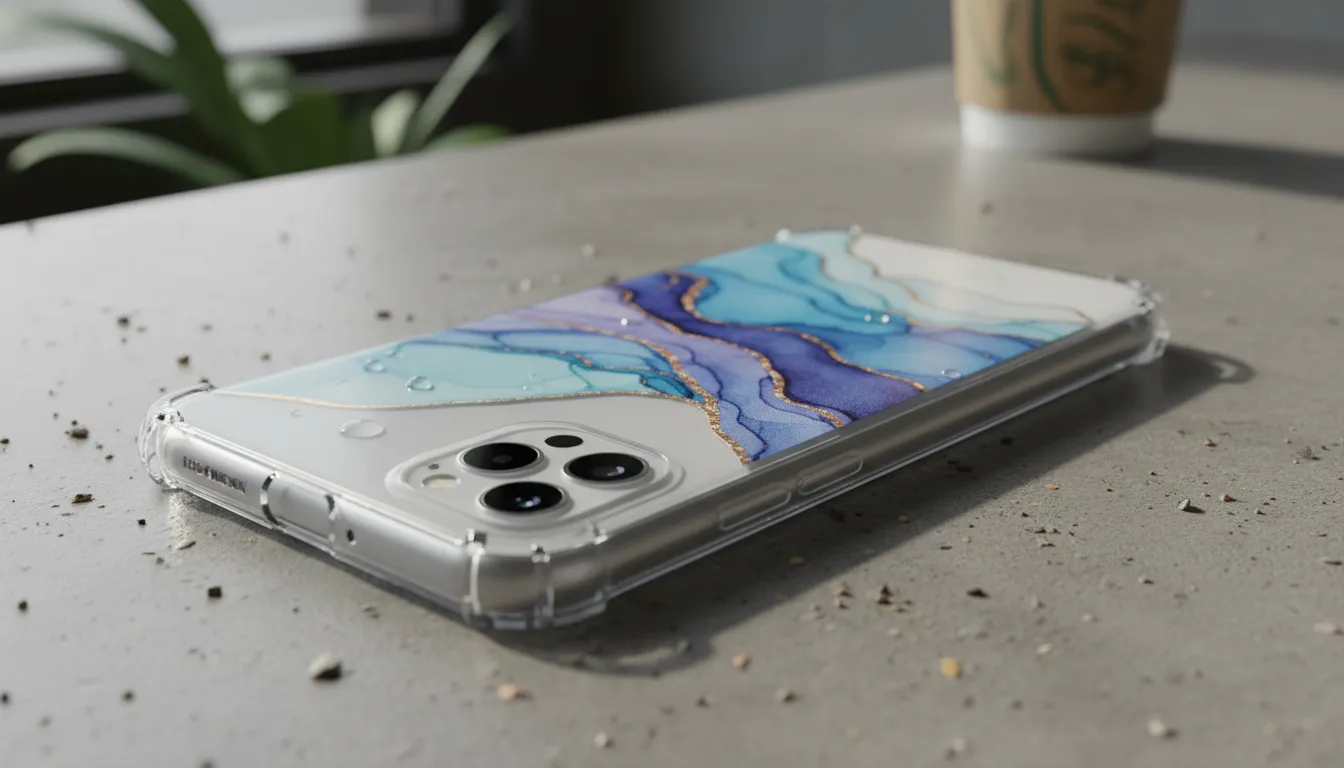
Your phone slips from your hand, hits the sidewalk, and your stomach drops before it does. That moment is exactly why a case matters: it’s a small purchase that can save you from cracked glass, scuffs, and costly repairs.
Did You Know?
Many phone screens crack from short drops onto hard surfaces; a raised lip and shock-absorbing corners in cases like Spigen Tough Armor or OtterBox Defender can help reduce impact on the display.
Source: General consumer guidance (varies by model and drop conditions)
A phone case is an essential accessory to protect your device from scratches, bumps, and accidental drops. Available in a variety of materials such as silicone, hard plastic, leather, or premium fabrics, it combines functionality and style. Different styles include:
- Elegant: minimalist design with glossy or matte finishes, often in neutral colors like black, white, or beige.
- Sporty: impact-resistant, with ergonomic grip and non-slip materials, perfect for those always on the move.
- Custom: featuring prints, photos, or unique patterns to express your personality.
- Transparent: allows you to showcase your phone’s original design while keeping it protected.
A case not only preserves the phone’s integrity but can also become a fashion accessory that complements your everyday style. You’ll learn how materials differ, how styles fit real life, what to check before buying (MagSafe, grip, raised edges), and how to keep cases clean.
Why a phone case matters: protection and peace of mind
I don’t baby my phone; I use it one-handed while carrying groceries, set it on café tables, and toss it into bags with keys. Real-world damage usually isn’t dramatic—it’s the everyday stuff: corner drops onto tile, micro-scratches from grit, and scuffs from sliding across a desk. Those little hits add up, and they’re exactly what a good case is designed to absorb.
Quick reality check: drops tend to be the event that turns into a repair (cracked glass, bent frame), while scratches are the slow burn that ruins resale value. Even with tough glass like Apple’s Ceramic Shield on iPhone or Gorilla Glass on many Androids, the weakest points are still corners, camera bumps, and the edges that contact the ground first.
A phone case is an essential accessory to protect your device from scratches, bumps, and accidental drops. Available in a variety of materials such as silicone, hard plastic, leather, or premium fabrics, it combines functionality and style. Different styles include:
- Elegant: minimalist design with glossy or matte finishes, often in neutral colors like black, white, or beige.
- Sporty: impact-resistant, with ergonomic grip and non-slip materials, perfect for those always on the move.
- Custom: featuring prints, photos, or unique patterns to express your personality.
- Transparent: allows you to showcase your phone’s original design while keeping it protected.
A case not only preserves the phone’s integrity but can also become a fashion accessory that complements your everyday style.
Cost-wise, I think of a case as insurance I can see: a $30–$70 case from Spigen, OtterBox, or CASETiFY can be the difference between a harmless bounce and a screen replacement. And while AppleCare+ or Samsung Care+ can soften repair bills, warranties generally don’t cover accidental damage—so prevention matters as much as coverage.
Materials explained: silicone, hard plastic, leather, premium fabrics
The material is the part of a phone case I feel every single day: how it grips, how it slides into a pocket, and how it handles that inevitable fumble off a desk. Two cases can look similar online and perform totally differently in real life, so I like to decide based on the material first, then pick a brand and style (Spigen, OtterBox, Caseology, Bellroy, Nomad, Apple, Mous) that uses it well.
Silicone: shock absorbent, grippy, budget-friendly
Silicone is my default when I want confidence without thinking too hard. It’s naturally tacky, so it feels secure in my hand and it tends to soften impacts better than rigid shells. Cases like the Apple Silicone Case or simple silicone options from Caseology usually give a nice balance of daily comfort and basic drop protection.
The trade-offs are real: silicone loves lint and pocket dust, and lighter colors can pick up stains. If I’m picky about a “clean” look, I plan on wiping it down regularly or choosing a darker color.
Hard plastic (polycarbonate/TPU): rigid protection, slim designs
“Hard plastic” usually means polycarbonate (PC) for the rigid back, often paired with TPU on the sides for grip and impact absorption. This hybrid approach is why popular slim protective cases—like Spigen Ultra Hybrid or many Case-Mate clear cases—can stay relatively thin while still adding structure and scratch resistance.
Pure PC shells can feel slick and may transmit more shock on a corner drop, while TPU edges can yellow over time (especially on clear cases). If I’m buying clear, I look for brands that call out anti-yellowing coatings, and I accept that clear cases are often a replaceable item.
Leather: premium look, ages well, moderate protection
Leather cases (think Bellroy Leather Case, Nomad Modern Leather, or Apple’s older leather options) are about feel and aging. I like that leather gets a patina, becomes grippier, and looks less “brand new plastic” over time. Protection is typically moderate: great for scuffs and minor drops, less ideal for repeated hard impacts unless there’s a reinforced frame underneath.
Maintenance matters. Water and oils can stain, so I treat leather as a “nice everyday” choice, not a beach or gym workhorse.
Premium fabrics: unique textures, fashion-forward, variable durability
Fabric-wrapped cases (woven nylon, canvas-like weaves, or Alcantara-style microfiber seen on some premium accessories) feel warm and textured, and they stand out in a sea of glossy slabs. Brands like Mous and others sometimes pair fabric with internal shells, which can help a lot.
Durability varies wildly by construction: fabric can fray at corners, absorb oils, and pick up grime. If I go fabric, I commit to gentle cleaning and I avoid tossing it in the same pocket as keys.
My quick pros-and-cons comparison
- Weight: Silicone (light) | PC/TPU (light to medium) | Leather (medium) | Fabric (varies)
- Grip: Silicone (high) | PC (low) / TPU edges (medium) | Leather (medium-high) | Fabric (medium-high)
- Protection: Silicone (good everyday) | Hybrid PC+TPU (good, often best slim) | Leather (moderate) | Fabric (depends on inner shell)
- Price: Silicone (budget) | PC/TPU (budget to mid) | Leather (premium) | Fabric (mid to premium)
- Maintenance: Silicone (easy but attracts lint) | PC/TPU (easy) | Leather (needs care) | Fabric (most finicky)
Styles compared: elegant, sporty, custom, and transparent
I think of phone case “style” as a bundle of trade-offs: how much bulk I’ll tolerate, how grippy it feels in my hand, and whether it looks like a tool or an accessory. Brands like Apple Silicone Case, Bellroy Leather Case, Spigen Tough Armor, OtterBox Defender, Casetify, and Tech21 Evo make these categories easy to spot once I know what I’m looking for.
Elegant: minimalist finishes, neutral colors
Elegant cases prioritize clean lines and a slim silhouette, with finishes like matte soft-touch silicone, smooth leather, or understated polycarbonate. I pick this style when I want sleek protection that slips into a pocket easily and doesn’t snag on fabrics or bag linings. Good examples are the Apple Silicone Case, Bellroy leather options, and slim designs from Totallee.
The trade-off is that ultra-thin cases typically focus on scratch resistance and everyday scuffs, not repeated hard impacts. I look for raised screen and camera lips even on minimalist cases, because those millimeters matter on desks and sidewalks.
Sporty: impact resistance and ergonomic grips
Sporty cases are built for active lifestyles: textured sides, corner bumpers, and thicker shells that absorb drops. This is where brands like OtterBox (Defender or Symmetry), Spigen (Tough Armor), and UAG (Monarch) shine. If I’m carrying my phone on commutes, at the gym, or around kids and pets, extra grip and structure are worth the added bulk.
Ergonomics are part of the “sporty” look: ridged edges, rubberized materials, and designs that help me keep hold when my hands are sweaty or I’m moving fast. The aesthetic is bolder, but the confidence is higher.
Custom: personalization, photos, and limitations
Custom cases—like Casetify prints, Shutterfly photo cases, or Etsy-made designs—are about identity: monograms, team colors, artwork, or a favorite photo. I love custom options when I want my phone instantly recognizable on a table full of devices.
The limitation is that protection varies with the base case. A gorgeous printed shell might be slim and slick, while a customized rugged case may cost more and feel thicker. I also expect prints to wear over time on high-contact areas like corners and edges.
Transparent: show the phone, stop the scratches
Transparent (clear) cases are for showing off the original design—especially on phones with distinctive colors or finishes. Spigen Ultra Hybrid and Apple Clear Case are popular examples. I mainly rely on clear cases for scratch protection and light drop defense, and I keep in mind that some clear materials can yellow with age and UV exposure.
Side-by-side comparison (what I’m really choosing)
- Elegant: Protection level: medium; Aesthetics: clean/neutral; Best use case: work, dinners, pocket-first minimalism.
- Sporty: Protection level: high; Aesthetics: rugged/technical; Best use case: travel, outdoors, high-drop-risk days.
- Custom: Protection level: depends on base; Aesthetics: personal/loud or subtle; Best use case: gifts, branding, easy identification.
- Transparent: Protection level: medium; Aesthetics: “bare phone” look; Best use case: show phone design while guarding against scratches.
How to choose the right case for you (practical buying guide)
I buy a phone case by deciding what I’m optimizing for: protection, slimness, or style. If I’m hard on my phone (gym bag, keys, commuting), I lean toward tougher options like OtterBox Defender Series, UAG Monarch, or Spigen Tough Armor. If I want pocket-friendly, I look at cases like Caudabe Sheath or total-minimal shells like Peel—knowing I’m trading away drop protection.
1) Set your priority: protection vs slimness vs style
For protection, I look for a grippy TPU bumper, reinforced corners, and a raised lip around both the screen and camera. For slimness, I accept less “air gap” and less corner bulk, and I avoid slippery glossy finishes. For style, I check long-term wear: clear cases (like Spigen Ultra Hybrid) can yellow, and vegan leather can scuff—so I decide what aging I’m okay with.
2) Compatibility checks that save regret
I verify the exact phone model down to “Pro/Max/Plus” because button placement and camera modules change every year. If I use wireless charging, I avoid overly thick designs and confirm reviewers say it charges on a Qi pad. If I use MagSafe accessories, I choose explicit MagSafe-compatible models (Apple Silicone Case, ESR HaloLock, Spigen MagFit) so the magnets don’t feel weak or misaligned.
I also check the boring stuff: USB‑C cutout width for chunky cables, speaker/mic alignment, and camera bump clearance so lenses don’t rock on a table. For Samsung Galaxy Ultra models, I pay extra attention to the camera ring height and whether the case interferes with a lens protector.
3) Price tiers: what I expect at each level
Budget ($10–$20): basic TPU/silicone from Amazon brands like Ringke or JETech; fine grip, but magnets and finish consistency vary. Midrange ($25–$50): better materials, nicer buttons, clearer MagSafe performance (Spigen, ESR, Caseology). Premium ($50–$80+): refined fit/feel and brand support (Apple, Nomad, Peak Design), but I still verify real-world reviews.
4) Where I buy (and why it matters)
I use brand stores (Apple, OtterBox, Nomad) when I care about warranty and authenticity. I use marketplaces like Amazon only if the listing is “sold by” the brand/storefront and returns are straightforward. For custom designs, I pick Casetify or Skinit, then double-check cutout accuracy for my exact model.
- Fit: exact model name, button feel, no wobble on a table
- Material: TPU for grip, polycarbonate for rigidity, leather for feel
- Compatibility: MagSafe/Qi, port clearance, camera/screen raised lip
- Safety net: clear return window, warranty terms, believable reviews/photos
Care, maintenance, and maximizing protection
I treat my phone case like a wearable part: if I keep it clean and structurally sound, it keeps doing its job. Grime in corners can make a case feel slick, and a stretched fit can quietly reduce drop protection.
Cleaning by material (without ruining the finish)
For silicone cases (like Apple Silicone Case), I pull it off and wash with warm water and a drop of Dawn dish soap, then use a soft toothbrush for the camera ring and button channels. For hard plastic/TPU shells (Spigen Ultra Hybrid, OtterBox Symmetry), a microfiber cloth lightly dampened with 70% isopropyl alcohol is my go-to—especially around edges where skin oil builds up.
Leather cases need the gentlest routine: a dry wipe first, then a dedicated leather cleaner/conditioner (Apple Leather Cleaner or a pH-neutral alternative). Fabric cases (Peak Design Everyday Case fabric back, or canvas styles) do best with spot cleaning and blotting; aggressive rubbing can fuzz the weave and dull color.
When I replace a case (not just when it looks bad)
- Cracks/splits at corners, or any hard-shell chip that could scratch the phone
- Silicone that feels loose, warped, or slides off too easily
- Flattened inner padding/liner that doesn’t “bounce back” after a squeeze
- Raised edges that no longer sit above the screen or camera lenses
Combine layers for real-world protection
A case handles impact; a screen protector handles abrasion and direct hits. I like a tempered-glass option such as Spigen Glas.tR EZ Fit, then I pair it with a case that has a decent front lip and camera ring. For clear cases and custom prints (Casetify-style designs), I store the phone out of sun/heat—UV and hot dashboards accelerate yellowing and fading fast.
Frequently Asked Questions
When I’m shopping for a phone case, I’m usually balancing three things: real drop protection, everyday convenience (charging, pockets, grip), and long-term durability. These are the questions I ask myself before I buy another OtterBox, Spigen, or Apple case.
What’s the best material for drop protection? ▼
Will a case interfere with wireless charging or MagSafe? ▼
How do I clean and disinfect different case materials safely? ▼
Can using a case void my phone’s warranty? ▼
Which style offers the best camera and screen protection? ▼
How often should I replace my phone case? ▼
If I’m unsure, I test the basics immediately: confirm my MagSafe Wallet or charger snaps into place (iPhone), verify button feel isn’t overly stiff, and check that the case lip actually clears my screen protector edges. A case should protect my phone, not make it annoying to use every day.
Conclusion
A phone case is an essential accessory to protect your device from scratches, bumps, and accidental drops. Available in a variety of materials such as silicone, hard plastic, leather, or premium fabrics, it combines functionality and style. Different styles include:
- Elegant: minimalist design with glossy or matte finishes, often in neutral colors like black, white, or beige.
- Sporty: impact-resistant, with ergonomic grip and non-slip materials, perfect for those always on the move.
- Custom: featuring prints, photos, or unique patterns to express your personality.
- Transparent: allows you to showcase your phone’s original design while keeping it protected.
A case not only preserves the phone’s integrity but can also become a fashion accessory that complements your everyday style.
🎯 Key takeaways
- → Prioritize protection first (drop rating, raised lips, grippy materials), then pick a look you’ll actually carry every day.
- → Match the case to your routine: slim silicone for pockets, rugged TPU/polycarbonate for commuting, leather or fabric for a premium feel.
- → Make it last: clean regularly, rotate cases if you can, and replace when corners loosen or the shell cracks.
My next step: I’ll shortlist two options—Spigen Tough Armor for everyday durability and Apple Silicone Case (or CASETiFY Impact Case) for a cleaner look—then confirm MagSafe/Qi2 fit, camera-lip height, and button feel. For care, I’ll wipe silicone/TPU with mild soap, spot-clean leather with conditioner, and swap the case if it warps or stops gripping the corners.
TL;DR: A phone case is a small, essential purchase that protects your device from drops, scratches, and costly repairs by absorbing impacts at corners and edges—look for raised lips and shock‑absorbing corners (e.g., Spigen Tough Armor, OtterBox Defender). Cases come in various materials and styles (silicone, hard plastic, leather; elegant, sporty, custom, transparent), so choose one that fits your use and check for MagSafe compatibility, grip, raised edges, and ease of cleaning to maintain protection and resale value.
Comments
Post a Comment